
Archeologist uncovers deeper layers of Montana history
A revived story of a Japanese community living in Harlowton paints a new picture of what life was like in rural Montana during the height of the railroad.
Janelle Fulbright is a second-generation Montanan whose family story at first glance may seem unique, but in actuality, echoes that of many Montana families.
Fulbright's maiden name is Satake. Her grandfather immigrated to the United States from Japan in 1907. The promise of a steady railroad job brought him and other Japanese immigrants to the small central Montana town of Harlowton.
Fulbright said once her grandfather made enough money, he brought his bride-to-be over the Pacific. They met in Seattle, were married and raised 10 children in Harlowton.
Once grown, a few of the children, Fulbright's father included, also took jobs with The Chicago, Milwaukee, St. Paul, and Pacific Railroad Company, better known as The Milwaukee Road.
Those American families of Japanese descent lived on railroad-owned land between the Harlowton roundhouse and Musselshell River. Fulbright said her father mostly viewed Harlowton as a tight-knit community.
"Anybody who ever lived there at the time, they had each other's backs, and they did take care of each other," she said. "There was something special about that age in Harlowton."
Then, on the morning of Dec. 7, 1941, Japan launched a military strike on the United States Pacific Fleet at its naval base in Pearl Harbor on Oahu, Hawaii.
Following the attack, about 120,000 people of Japanese descent, about two-thirds of whom were U.S. citizens, were forcibly imprisoned in internment camps across the country.
In Harlowton, the Satake men lost their jobs inside the roundhouse over fears they may attempt to sabotage operations. Fulbright said, according to family stories, the Satake family was slated to be sent to Heart Mountain, a Japanese internment camp in Wyoming and the state’s third largest population center at its height.
Fulbright said that is when their Harlowton neighbors stood up for her family.
Two men in particular, local newspaper editor Hal Stern, Sr. and Milwaukee Road employee Tony Francisco, Sr. vouched for the families, according to Fulbright, and agreed to take responsibility for them. They were permitted to stay in Harlowton. The men were given jobs in the rail yard so they could be more easily monitored.
She said family stories told of a "peg-legged government worker" who obviously could not fight in the war sent to Harlowton. The man lived in the rail yard for two years watching over the families.
They had to turn in their firearms and ammunition to the sheriff's office. They were permitted to hunt but needed to check their firearms and ammunition out from the sheriff's office and return them at the end of the hunt, including all spent casings.
"Even with the animosity, because there were some people who called them names and didn't trust them, any of the Americans of Japanese descent really, but as my dad said, there were always good people. There were always good people," she said.
Fulbright's husband, a historian, recovered railroad documents that showed two of Fulbright's uncles worked with another man on the same roundhouse shift for years, but on the morning of Dec. 8, 1941, they did not show up for work, but their coworker did. Fulbright said they went to enlist in the U.S. Army that day.
Eventually, three of her uncles served in the Army’s 442nd Infantry Regiment. The most decorated unit in U.S. Military history, it was comprised almost entirely of Americans of Japanese descent.
Fulbright said when her father married her mother, they moved to Three Forks, where he also got a job with The Milwaukee Road. They raised their kids, including Fulbright, there.
"Even in Three Forks, that same small town community sentiment of 'we got your back,' you know that Montana spirit, I believe that happened there too," she said.
Fulbright said she believes that Montana spirit resonates in communities across the state to this day.
"We're in Lewistown now," she said. "We raised our four kids here, my husband and I, because we love the small community."
The stories of these families were recently revived as part of an ongoing Montana Department of Environmental Quality clean-up project focused on the old railroad facilities in Harlowton.
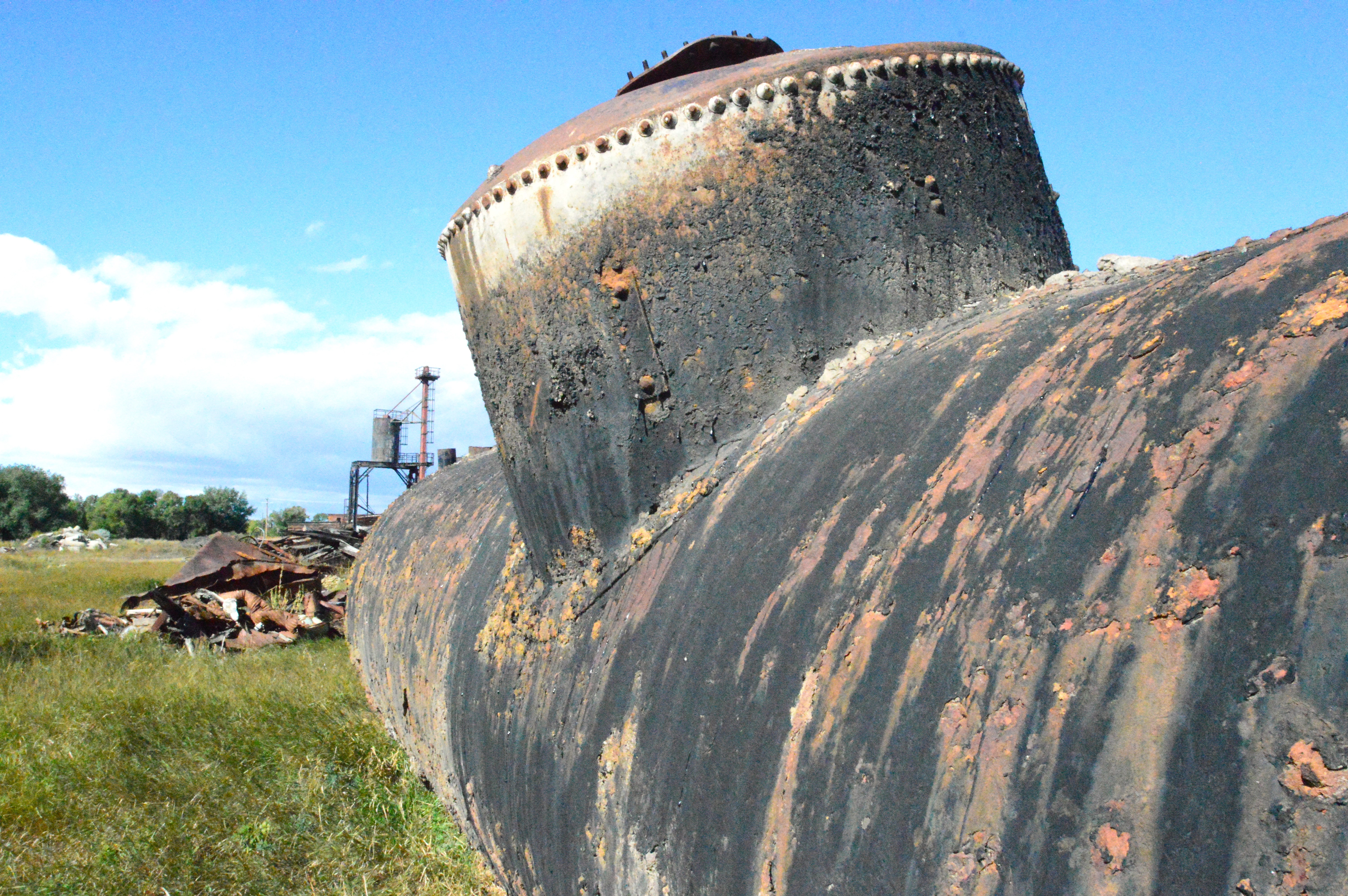
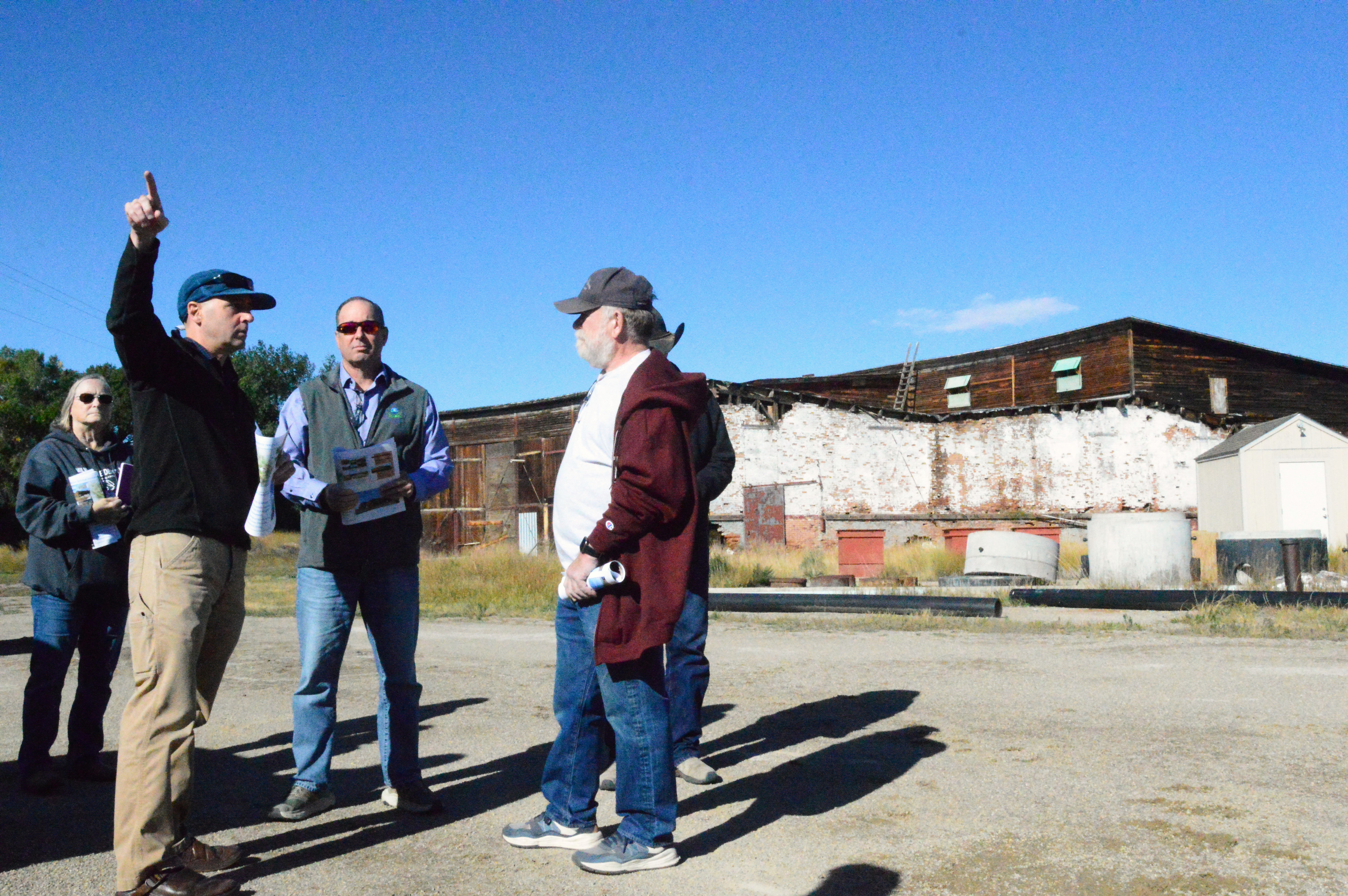
For decades, the railroad operations there severely contaminated the surrounding environment. The town of Harlowton inherited the site following the railroad's bankruptcy, and it has since deteriorated into industrial ruins.
DEQ's Brownfields program has stepped in to help rehabilitate the property using federal grant dollars in hopes of transforming it into reusable land benefiting the community. Redevelopment plans call for a railroad history museum, an amphitheater, hiking trails and a day-use recreational site.
As part of any project like this receiving federal dollars, the work must comply with state historic preservation office regulations, which is how DEQ's in-house Archeologist James Strait came to work on the site.
Strait said the site was already listed on the National Register of Historic Places, so going in, he knew there "would be a little bit there."
"(The project) seemed pretty straightforward given what was already there, what needed to be updated, that kind of thing," Strait said. "But it was at the end of doing that report (to comply with federal grant requirements) when we came across some documentation that showed where this Japanese community was, and that it was right there on the site. That triggered more questions of 'well, this might actually be bigger and more interesting than we thought it was.’"
While U.S. Environmental Protection Agency employees conducted additional geophysical survey work, DEQ’s Strait worked in tandem to further scan the site and identified the exact locations of the families’ homes.
“This led to the realization that there was still information that could be obtained there through archeological excavations,” Strait said.
The archeological research as part of the Harlowton project is intended to compensate for any loss of information that may have occurred prior to or during the current clean-up efforts.
"It's a chance to tell the story of this Japanese community, which is fairly unique in itself," he said. "It's not unheard of to find Chinese communities in small towns, especially railroad associated towns, but to have specifically a Japanese community is really very unique. What we're hoping is that it will paint a different picture and story from what is typically told from a Montana town."
DEQ Waste Management and Remediation Division Administrator Amy Steinmetz said because so much of the department's work “intersects with Montana’s cultural resources,” the formation of the archeologist position was critical.
"Protecting Montana's environment includes protecting the history written across its landscapes," Steinmetz said. "DEQ's archaeology work ensures that cleanup and redevelopment of contaminated properties move forward responsibly while respecting cultural resources and honoring our partnerships with Montana communities, including Tribal Nations."
For Fulbright and her family, the work to uncover their stories is irreplaceable.
"It means the world to our family because so many people don't know the story, or its history from so long ago, and it happened right here in central Montana," she said. "It happened all over the United States. If we don't educate people, and we don't show them what did happen, and honestly, right here on our own sacred ground, it will happen again. If this can save other families from living through what my family did, it's worth all the sweat and blood and tears and grants and every interview."
The Satake family's story is the story of most Montana families. The Norwegian pioneers who settled in Sweet Grass County. The Irish immigrants who forged a life for themselves in the mineshafts below Butte. Americans from the East Coast seeking out a better life for themselves.
"I know it was hard for them," Fulbright said of her family. "And, actually, until the day my dad died, I still feel he looked over his shoulder wondering who was watching him or who was looking at him because of those experiences. But the thing my dad taught me through it all is that eventually, as time goes on, dad taught me how to forgive and to love those who hurt us as Christ would have wanted us to do. ... My dad was able to teach us that after he suffered through all of that."
Tags: Cleanup and Featured